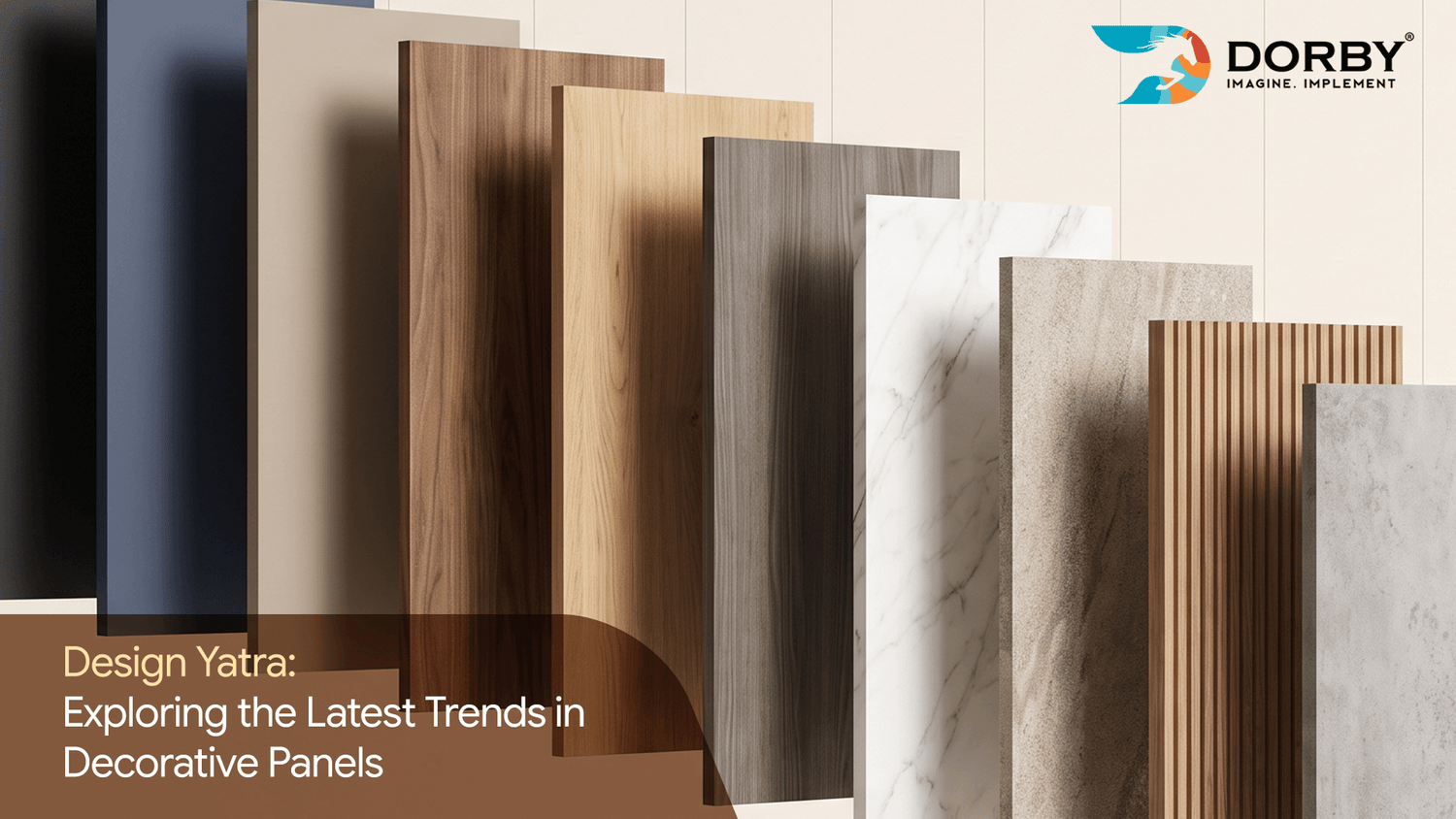
Design Yatra: Exploring the Latest Trends in Decorative Panels
Interior design is becoming more layered in Indian homes. People are looking beyond plain surfaces and asking how a wall, wardrobe or panel can carry mood without making the room feel crowded. This is where decorative panels and laminates are getting more attention. Design Yatra by Dorby fits into this shift by looking at surfaces as part of a larger design journey, where colour, texture and finish work together.
Decorative Panels are Becoming More Expressive
Decorative panels are no longer chosen only to cover a surface. They are now used to shape the feeling of a room.
The current direction is more personal. Buyers want surfaces that feel planned, not random. Some prefer soft movement, while others lean towards bolder patterns. The idea is to create interiors that feel finished, but not overly decorated. In this space, designer laminate sheets are being viewed as design elements that can influence the entire room.
A good panel choice usually considers:
- Room size and lighting
- Existing furniture finish
- Wall colour and flooring
- Pattern scale
- Overall mood of the space
Abstract Surfaces are Finding a Place Indoors
Abstract design works well when a room needs interest without a literal pattern. Abstract laminates can bring movement, shape and depth to indoor surfaces. The appeal is that they do not have to follow one fixed design language.
They can feel soft, artistic, structured or fluid, depending on the chosen finish. This suits people who want something beyond plain colours, but still want the room to look balanced.
The key is restraint. An abstract surface should get enough breathing room. When every surface competes for attention, the room can start feeling heavy.
Texture is Becoming as Important as Colour
Colour is usually the first thing people notice, but texture decides how the surface feels within the room.
Modern laminate designs are moving towards finishes that add quiet detail. A matte surface can feel calm. A fluted or fabric-inspired finish can add visual depth. A stone-inspired or wood-inspired surface can bring a layered look. None of these choices works in isolation. They have to be seen with the rest of the room.
Texture also affects how light moves across the surface. That is why it is better to view samples under indoor lighting before making a final call.
Statement Panels Are Being Used with More Care
A statement surface can improve a room’s character, but only when it is used thoughtfully. Instead of filling every panel with detail, many designers now prefer one clear focus area. This keeps the room easy on the eye. The rest of the surfaces can stay simpler, allowing the highlighted panel to carry the design mood.
This approach works well in Indian interiors where rooms often serve more than one purpose. A shared room should look stylish, but it should feel comfortable.
Coordinated Finishes are Gaining Attention
A room looks more refined when surfaces speak the same design language. People are now paying attention to how panels, wardrobes, shelves and doors sit together. The finish does not need to be identical everywhere. It only needs to feel connected. A similar colour family, related texture or balanced contrast can make the space look more composed.
While browsing top laminate companies in India, buyers often look for range, finish clarity and catalogue support. A wide design range helps them compare surfaces with better confidence.
Design Yatra Brings a Curated Way to Explore
The value of a design journey lies in how it helps people understand choices, not just view them.
Design Yatra by Dorby presents surfaces through inspiration, texture, colours and finishes. This makes the selection process less mechanical. Instead of picking a laminate as a last step, buyers can think about the room’s personality from the beginning.
This helps designers explain choices more clearly. When the surface direction is curated, it becomes easier to discuss mood, finish and placement with homeowners.
Choosing Panels for Long-Term Visual Comfort
A decorative panel should feel attractive today and comfortable after daily use. Before choosing a finish, it helps to step back and look at the full room. A design may look beautiful in a catalogue, but the room decides how it finally feels. Scale, shade and nearby surfaces matter.
Keep these points in mind:
- Avoid using too many patterns together
- Balance detailed panels with plain surfaces
- Choose finishes suited to indoor applications
- Check samples in actual room lighting
- Let one surface lead the design mood
Final Thoughts
Decorative panels are becoming important in modern interiors because they bring surface, mood and personality together. From abstract laminates to refined textures, the latest direction is about thoughtful selection rather than excess. Design Yatra encourages that approach by helping buyers and professionals see surfaces as part of a complete interior story.