
Quick Summary
Artificial Intelligence has now evolved changes in interior design. AI helps in selecting the right materials when starting a project. Many designers use AI tools that help them make smarter and more informed decisions.
Choosing the right material has always involved balancing durability, stability, aesthetics, budget, sustainability and maintenance. Now, AI tools simplify this process by analyzing large data and providing recommendations. AI is helping professionals select materials precisely and with greater confidence while planning smart interiors for residential or commercial projects.
Why Material Selection Matters in Smart Interiors
Materials influence more than just the appearance of the space. They determine how long a furniture or surface will last, how easy they are to maintain, and whether it’s comfortable as per the environment. Poor material choice can lead to cost, replacements, renovation and faster wear and tear.
AI in interior design assists designers by helping them understand multiple factors simultaneously, making it easier to choose materials that meet the client’s requirements.
Faster Material Recommendation
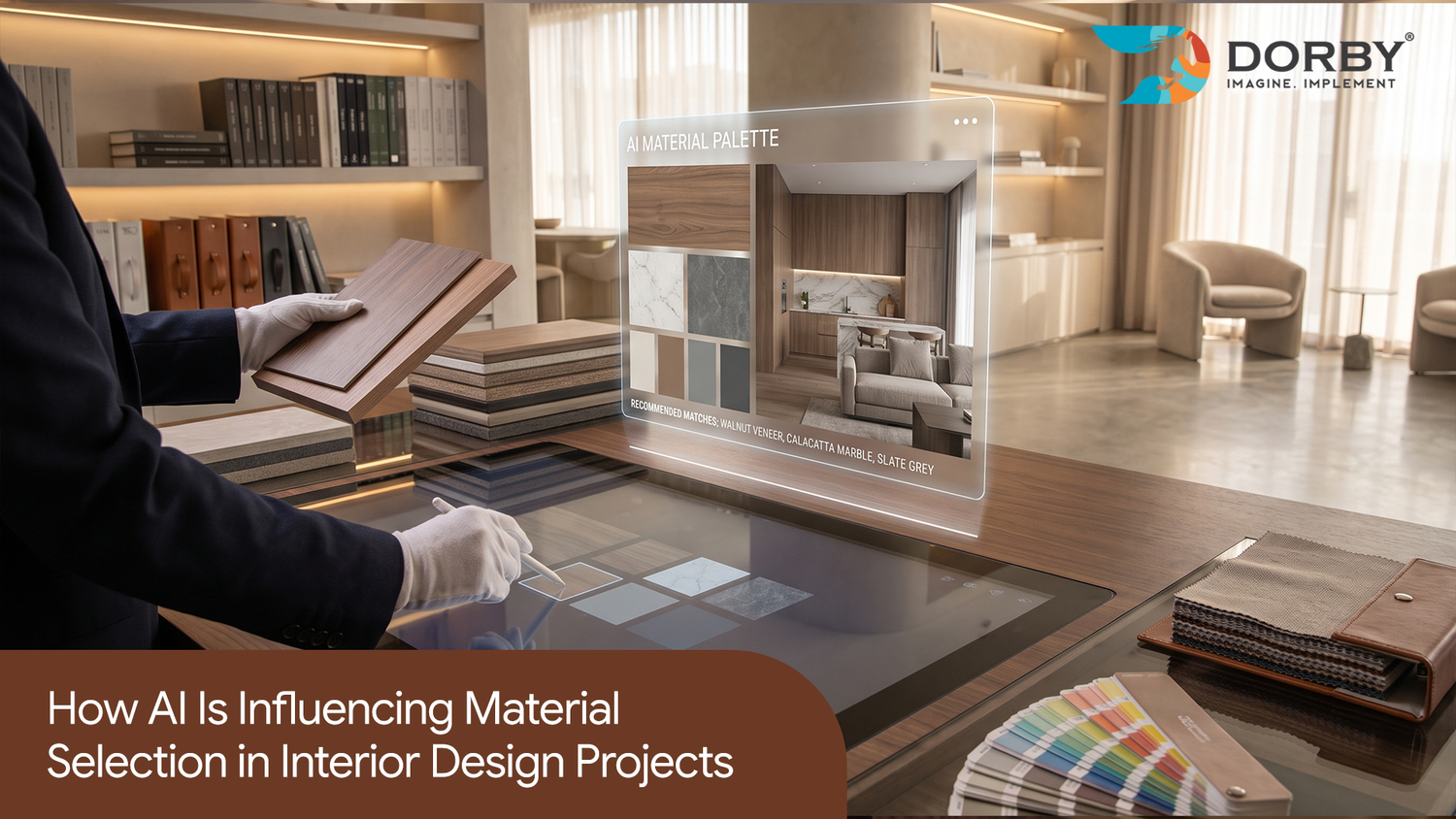
Going through hundreds of product catalogue becomes time consuming. With AI, it will speed up the process by filtering materials based on project specifications such as:
- Budget
- Color palette
- Texture
- Durability
- Sustainability
- Moisture- Resistant
It minimizes the material effort by comparing multiple options. Designers get recommendations which helps them match according to their project needs.
Smarter Matching of Design Projects
Every interior style requires material that complements the overall theme. Whether designing a modern apartment, a luxury office or a Scandinavian inspired home, AI can suggest surfaces, laminate finishes, and flooring that suit the selected design style.
By learning from previous projects and designs, AI helps maintain consistency and reduces the chances of mismatched materials.
Improving Sustainability
Considering sustainable design has become an important factor in modern laminates. With the help of AI, it has become easier to identify materials that have a low impact on the environment.
It can compare options based on factors such as:
- Recycled content
- Carbon footprint
- Lifespan of the material
- Energy-efficient manufacturing
- Waste reduction
This helps designers to create spaces that are both attractive and environment friendly without compromising the overall performance.
Better Cost Planning
One of the biggest challenges in interior design is budget management. It’s not necessary that premium finishes would need a premium budget. AI now helps estimate the budget or cost of the project by comparing prices of different suppliers and calculates the quantity required for each space.
It also helps identify alternative material options that have similar appearance and performance at a lower price. This helps the client to stay within budget and renovate the space as per their desire.
Personalized recommendations for clients
Every client has their own preferences and lifestyle requirements. Some prioritize budget while some look for luxury finishes or eco-friendly materials. AI assist in analyzing project inputs and client preferences and
accordingly suggests materials that match their expectations. This also helps reduce the number of changes during the design process.
Visualization Before Installation
One of the useful features of AI is that it helps the client visualize how the selected material will look before the installation process begins.
Advanced design software can generate realistic 3D renderings that combine flooring, wall panels, furniture, laminate and lighting into a complete actual model. AI material selection also helps the client compare different combinations, reduce uncertainty and control cost.
AI Helps Reduce Material Waste
Material wastage increases the project cost and also negatively impacts the environment. AI can calculate the exact quantity of material required considering the room dimensions and project layouts.
This calculation helps minimize excess ordering of material before the installation. Better planning results in lower cost, improved efficiency and proper resource management.
AI Does Not Replace Human Creativity
Although AI offers valuable insights, it cannot replace the human touch, creativity and personal judgement. Designers understand the emotion, culture, lifestyle and client requirements in ways that a technology cannot do. AI should be viewed as a decision-making tool that enhances the designing process rather than replacing the expertise.
A successful project is a combination of AI driven insights and along with creativity and problem-solving skills of an experienced designer.
The Future of AI in Interior Design
As AI is rapidly evolving, material selection has become easier. Smart interior design will become more data-driven. Future tools may predict long-term maintenance cost, recommend locally sourced material, monitor inventory in real time and analyze user behavior to create more personalized interiors.
Manufacturers have also started integrating AI into their product database, which helps designers know about the material specifications, warranties, certifications and sustainability credentials.
The combination of technology and designer expertise will help create interiors that are more efficient, sustainable and tailored as per client needs. AI plays a very important role in the future of interior design by allowing design decisions, customized spaces, and an efficient way of using materials.
Frequently Asked Questions (FAQs)
1. How does AI help in selecting materials?
AI analysis factors such as budget, durability, design style, sustainability and maintenance requirements to recommend the correct materials for a project.
2. Can AI reduce the cost of interior design?
Yes, AI can reduce costs by improvising and suggesting the quantities of material required, comparing prices and suggesting cost-effective materials without compromising the overall performance.
3. Will AI replace human touch?
No. AI supports designers by providing them data and useful insights, but it cannot replace the creativity and client communication that requires human skills.