


In interior furniture design, the smallest details may determine the overall finish. One such detail is edge banding, a subtle yet essential element that completes exposed panel edges. These edges determine the refinement of a cabinet, wardrobe or a shelf unit as well as contribute to the coherence of design language and durability.
Even the highest quality of surface may appear rough unless it receives the appropriate edge treatment. This is where PVC edge band has been a favorite in modern interiors. Read on to understand what PVC edge banding is, its benefits, different types, and where it is used.
What Is PVC Edge Banding?
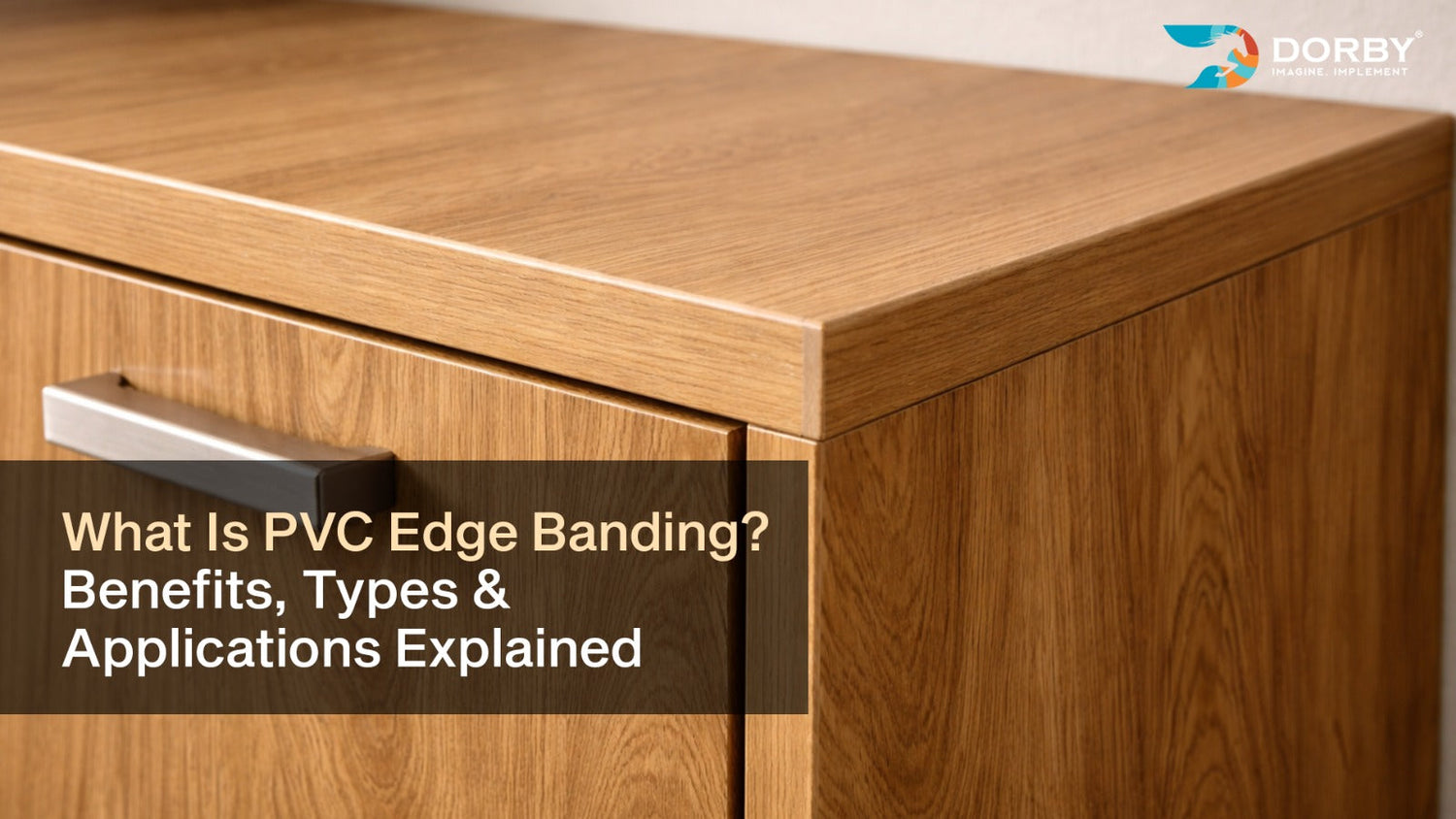
PVC edge banding is a flexible strip that is used on the exposed sides of furniture panels so as to give them a clean finished look. It is usually paired with MDF, plywood, particle boards and decorative panels. Edge banding tape is used to cover the raw edges of furniture so that it appears visually complete and professionally made.
PVC edge banding is popularly used over alternatives such as ABS and natural wood veneer edge banding because of its smooth finish, consistent color choices, and versatility in a variety of design styles. It has the advantage of being used easily with laminate edge banding, which has made it popular in modern interiors.
How PVC Edge Banding Is Made
The high-quality polyvinyl chloride is used to create PVC edge banding. This gives it flexibility, consistent thickness and a broad range of colors and finishes. Pigments and surface textures are used during manufacturing to ensure that there are no differences in the look of one batch to another. High-quality technology used in manufacturing contributes to accurate thickness and smooth edges, which allows the installation to be cleaner and more refined.
PVC edge banding can have several types of surfaces, such as gloss and matte, to allow the designers to match the edges with decorative panels. Glossy options, such as Dorby's premium gloss edge banding range, will provide a visual depth and modern image to furniture surfaces.
Key Benefits Of PVC Edge Banding
- Protection & Edge Coverage - PVC edge banding is used to cover exposed panel edges in a clean manner and allows the surface to have a polished and well-finished appearance over the years.
- Seamless Visual Continuity - Edge banding tape creates a uniform flow across furniture surfaces, enhancing overall design harmony by matching panels closely.
- Easy Maintenance - PVC edge banding does not need much maintenance. Edges can be wiped down with a soft cloth, and they will appear clean, without the necessity of polishing or repainting.
- Design Flexibility - PVC edge banding comes in gloss and matte designs in addition to wood grain and solid colors. This includes a wide range of interior themes.
- Cost-Conscious Premium Appeal - The PVC edge banding gives the same high-end look as solid edges. It is a viable option when it comes to a premium interior appearance.
Types Of PVC Edge Banding
A. By Finish
- Gloss PVC Edge Banding - Gloss finishes provide a smooth and reflective surface to increase light and add a modern feel. Dorby's gloss collection can elevate the overall aesthetic and will be ideal for modern wardrobes and cabinetry.
- Matte PVC Edge Banding - Matte finishes offer both non-reflective and soft appearance, and can be used where there is a desire to have minimal interiors, often with a feeling of calmness and subtle sophistication.
- Leather Finish - This finish gives it a textured and tactile look, and the design does not overpower.
- Wooden Finish - Wood-grain PVC edge banding reflects natural designs and is complementary to traditional decor or transitional styles.
B. By Thickness
Common thickness options include 0.8 mm, 1.3 mm, and 2.0 mm, which are chosen according to the size of panels, type of furniture, and the visual effect of the piece.
C. By Pattern & Color
Whether it is solid neutrals, wood grain patterns or textured surfaces, PVC edge banding comes in a variety of patterns and colors to match laminate edge banding and a collection of decorations.
D. Specialty Edge Banding
There are special variants, such as heat-tolerant, UV-stabilized, recyclable, antibacterial, antifungal, and long-lasting edge banding variants that should meet particular interior requirements.
The selection of the right type would be based on the space, gloss for premium kitchens or wardrobes, matte for relaxed interiors.
How PVC Edge Banding Enhances Interior Projects
- Wardrobes & Cabinets - An elegant appearance can be achieved with a refined edge finish to the wardrobes and storage units.
- Kitchen Storage & Counters - PVC edge banding supports neat finishes where frequent cleaning is part of daily use.
- Shelving & Display Units - Shelf edge banding is capable of reflecting light in order to make shelves and display units look brighter and visually expansive.
- Office or Commercial Interiors - Edge banding tape provides a clean look to the office and ensures that the furniture remains looking polished in high-traffic zones.
PVC edge banding remains a go-to choice for both designers and homeowners as interior trends in 2025–26 continue to favor clean lines and coordinated surfaces.
Installation Basics
The hot melt adhesives and automatic edge bander machines are used for the precise and repeatable application of PVC edge banding. Hand-applied methods are often utilized with subsequent trimming and finishing processes in smaller applications. Getting the right alignment and pressure ensures excellent results free of any gaps.
To make sure the joints are smooth and look good for a long time, you should hire a professional to do the work. Choosing edge banding that closely matches the panel decor helps keep the look of all the furniture surfaces in harmony.
Maintenance Tips For Lasting Performance
- Wipe down the edges of PVC regularly with a soft and dry cloth or a slightly damp cloth to remove the dust and smudges on the surface.
- Use a mild detergent when needed. Do not use harsh chemicals that can harm the surface finish.
- Wipe gently in the direction of the edge to preserve the original texture and appearance of the edge band.
- Periodically check the edges of furniture to see whether there is any lift off or a gap, particularly on used drawers or cabinets.
- With easy maintenance and regular inspections, PVC edge banding continues to support both everyday functionality and aesthetic appeal.
Conclusion – A Practical & Stylish Choice
PVC edge band combines visual refinement with everyday practicality. Therefore, it is a crucial finishing touch for contemporary interior design. It is also a versatile choice as it may maintain consistent design concepts while also enhancing the furniture's appearance.
This edge banding has various types of finishes, thicknesses, and patterns, making it simple to fit with different design preferences. The choice may appear to be a small decision, but it can have significant effects on the appearance and feel of furniture for years to come.


