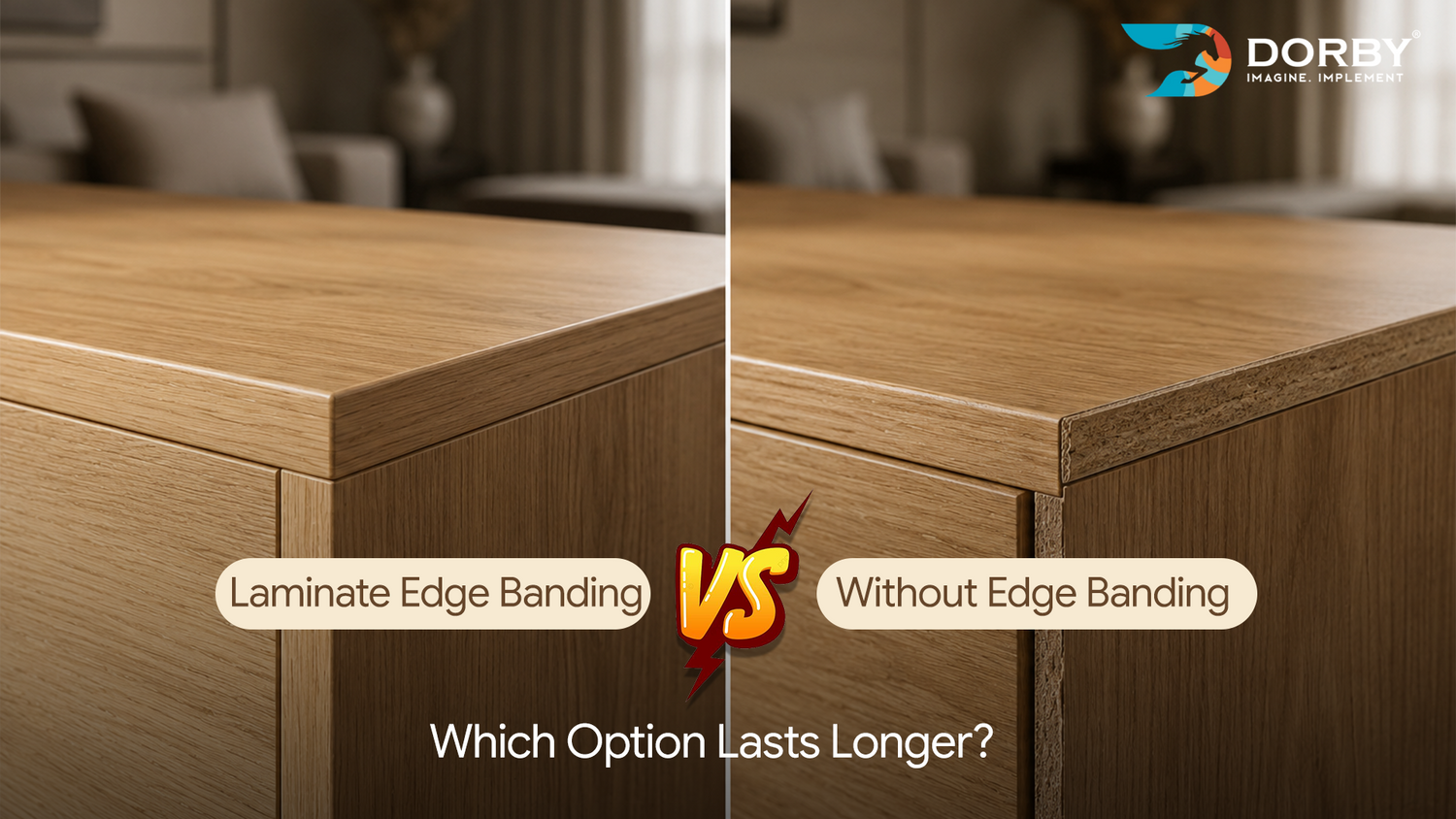
Laminate Edge Banding vs Without Edge Banding: Which Option Lasts Longer?
In contemporary furniture design, details often define the overall experience. The exposed edges of panels can easily be overlooked when using furniture laminates on wardrobes, workstations and modular furniture for visual refinement. The unfinished sides are usually the first place to wear in. This is where laminate edge banding becomes important. It helps protect vulnerable panel edges from common environmental and usage-related challenges beyond creating a cleaner finish.
But does furniture with edge banding really last longer than furniture without edge protection? Let's take a closer look.
What Is Laminate Edge Banding?
Laminate edge banding is a finishing material used on the exposed edges of furniture panels like plywood, MDF and particle board. It is used to cover raw edges and achieve a more elegant look.
Some of the common options include:
- PVC edge banding
- ABS edge banding
- Veneer edge banding
- Acrylic edge banding
It is generally applied with edge banding tape to give furniture a clean look by matching the edge of the panel with the laminate surface. Edge banding not only improves the appearance. It is also a practical solution to protect areas that experience regular contact.
What Happens When Furniture Edges Are Left Uncovered?
Exposed edges can still get damaged, even when the surface of the furniture is laminated. Unlike the visible face of a panel, these sides are in direct contact with the user and the environmental conditions.
Common issues include:
- Moisture absorption
- Chipping and cracking
- Swelling of board materials
- Dirt accumulation
- Premature wear and tear
For instance, the edges of wardrobes are exposed to indoor moisture, whereas desks in offices and study rooms might accidentally bump into something. In addition, the edges of kids' furniture and cabinet units are likely to get damaged at an early stage without protection.
Laminate Edge Banding vs Without Edge Banding: A Durability Comparison
While both furniture options may appear similar initially, differences often become noticeable with continued use.
Protection Against Moisture
Moisture is one of the most common reasons furniture panels deteriorate over time. Edge banding helps seal exposed sides, limiting direct exposure to humidity and minor spills.
Furniture without edge protection can absorb moisture through uncovered edges. This may eventually affect the panel beneath. But the furniture that is edge-banded will remain in good condition for a longer time when there is high humidity.
Resistance To Impact and Daily Wear
Furniture edges regularly encounter bumps, friction and everyday handling. PVC edge banding acts as a protective layer that helps reduce visible damage caused by accidental contact.
Corners have a high chance to chip or wear if the edges are not protected. These minor flaws can impact the furniture's overall look over the years.
Structural Integrity Over Time
The exposed edges can erode over time from repeated exposure to the environment. Edge banding is used to protect the underlying panel of the vulnerable sides.
This can reduce the chances of:
- Corner damage
- Edge deterioration
- Surface separation near panel ends
As a result, furniture often retains its intended form and finish for longer periods.
Appearance Retention
Edge-banded furniture will always look more polished compared to other types. The finished edges complement the laminate surface and create visual consistency.
By comparison, exposed edges may become rough, discolored or visibly worn. These factors can affect the quality of the furniture in premium interiors.
Why PVC Edge Banding Is A Popular Choice
The main reasons for the popularity of PVC edge banding in both residential and commercial furniture applications are its functionality and versatility.
Some of the essential benefits are:
- High durability
- Moisture resistance
- Flexibility during application
- Easy maintenance
- Wide variety of colors and textures
It is also a perfect fit for contemporary furniture laminates. Matching laminates and edge bands create a clean and integrated look while enhancing the overall furniture design.
Is Edge Banding Worth The Additional Cost?
When evaluating furniture investments, looking beyond the initial purchase cost is important.
Edge banding can assist in enhancing long-term value by providing:
- Reduced repair requirements
- Lower replacement expenses
- Better protection in frequently used areas
- Extended furniture lifespan
The additional investment is often viewed as a practical choice that assists in maintaining furniture quality over the long run for designers, manufacturers and homeowners.
Best Applications For Laminate Edge Banding
Edge banding is beneficial for furniture pieces that are constantly used and frequently touched.
Below are a few common applications:
- Kitchen cabinets
- Wardrobes
- Office workstations
- Study tables
- Retail fixtures
- Modular furniture
These applications, particularly in high-touch zones, benefit from maintaining visual and functional quality with protected edges.
How To Choose The Right Edge Banding Solution
Selecting the right edge banding depends on the furniture design and intended usage.
- Choose edge banding that complements the furniture laminate.
- Consider where the furniture will be used and how often.
- Check the required thickness for your product and surface finish.
- Choose quality edge banding tapes.
- Make sure all colors and textures match perfectly.
Final Thoughts
Uncovered edges are often more vulnerable to daily damage, moisture and chipping over time. Edge banding offers protection and is a practical choice for furniture used regularly. For this reason, PVC edge banding is widely used. Along with shielding panel edges, it helps create a cleaner and more polished finish on laminated furniture.