



Quick Summary
Choosing surfaces for your home may sound simple until you actually start doing it. You may like a wooden finish for your wardrobe or a textured wall for a living room and a light-coloured laminate for the kitchen cabinet. But will all these choices look good together? And how will they look once the furniture is installed?
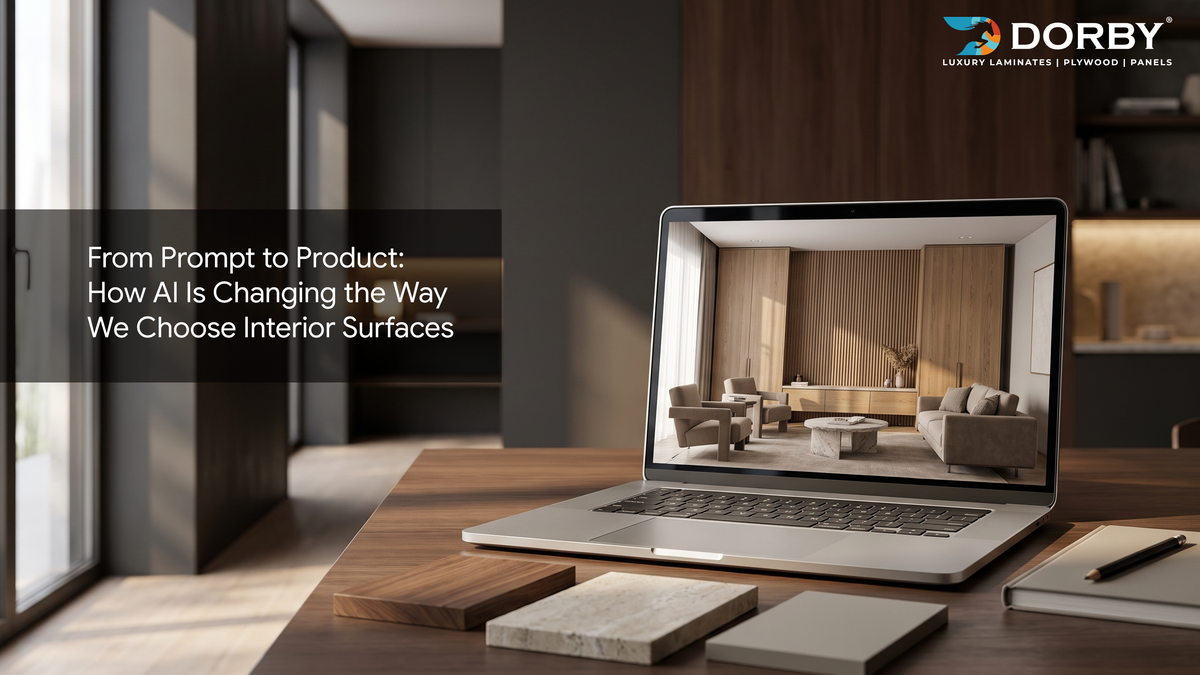
This is where AI has started to make a difference. Instead of spending hours going through the catalogues and imagining how a particular finish will look in a room, people can now use an AI tool to explore ideas before finalising.
From colours and textures to furniture finishes, AI in material selection is changing how homeowners and interior designers approach everyday design choices.
From a Simple Prompt to a Room Design
One good thing about AI design tools is that they are easy to use. You don’t need to know complicated design terms. A simple prompt such as "Show me a modern bedroom with walnut and beige walls” can get you a starting point.
You can try to change the prompt to a lighter wood finish or add a textured wall behind the TV. In a few minutes, you get several design ideas.
Earlier, getting a similar visual meant discussing with the designers, checking the catalogues and samples. These things are used now as well; however, AI makes the first stage of exploring ideas quicker.
This has also helped people explain what they actually want rather than describing the colours and finishes they need. Looking at multiple options makes decisions easier.
How AI is Influencing Different Surface Trends
Interior surface trends are no longer limited to what is popular in showrooms and magazines. With the AI tool, people can experiment with styles that can suit their homes.
For example, someone planning a small apartment can compare light wood laminates and warm neutral shades and subtle stone-inspired finishes before deciding what works best.
AI-generated visuals can help to explore ideas such as:
- Wooden finishes: Compare light oak, walnut and darker wood looks for wardrobes, cabinets and other furniture.
- Textured surfaces: See how fluted texture or soft patterns might look on a feature wall.
- Colour Combinations: Try whether beige, grey, green or earthy colours look best on existing furniture.
- Mixing finishes: See how a plain laminate finish would look alongside a wood grain finish.
These visuals can be used in filtering down choices, especially when many people are involved in planning a home. Everyone gets the opportunity to see their suggested design.
AI Helps in Better Choices
Looks are important, but choosing a surface also involves practical decisions. For example, a wardrobe in a bedroom may need a different finish from a decorative panel used in the living room.
AI helps organise decisions by comparing options based on the information provided. You can ask it to suggest easy-to-maintain finishes, colours for a small room or surfaces according to the budget. AI in material selection has now helped people make better choices.
However, it is still important to check the actual product before buying. We cannot completely rely on AI, as it cannot confirm the laminate’s durability, thickness, or maintenance requirements unless accurate product information is available. This should only be treated as the starting point and not the final answer.
Where Laminate Fits into Smart Design Technology
Laminate remains a popular choice for wardrobes, cabinets, tables and other furniture, as it offers plenty of options in colours, patterns and finishes.
With smart design technology, homeowners can visualise different laminate options in a room before visiting the showroom. A dark wood finish might look attractive, but a lighter option can make the bedroom look more open. Comparing both options digitally can help people make a more considered choice.
Expensive Does Not Mean Best
While exploring laminate, we come across plenty of options. There are expensive laminates as well, and that does not mean they are the best ones. When exploring the best laminate brands in India, it is worth looking beyond the visual design and price. Check the available finishes, product specifications and warranty. Physically checking the laminate can help you understand the real colour and texture.
Will AI Replace Interior Design?
AI can generate ideas, but it does not understand every detail of a home. It only works as per the prompt we enter.
An interior designer brings experience and highlights problems that an AI-generated image may miss. It's a decision-making tool. Expertise and skill lie with the designer, as they understand how much material would be used and the emotion and culture behind planning a home.
Frequently Asked Questions (FAQs)
1. How is AI changing interior surface selection?
AI helps homeowners and designers visualise different options, colours, textures and finishes before finalising materials. This helps in comparing ideas.
2. Can AI help me choose the right laminate?
Yes. AI can suggest laminate colours and finishes based on your room style, furniture and preferences. However, you should check the real samples before buying.