
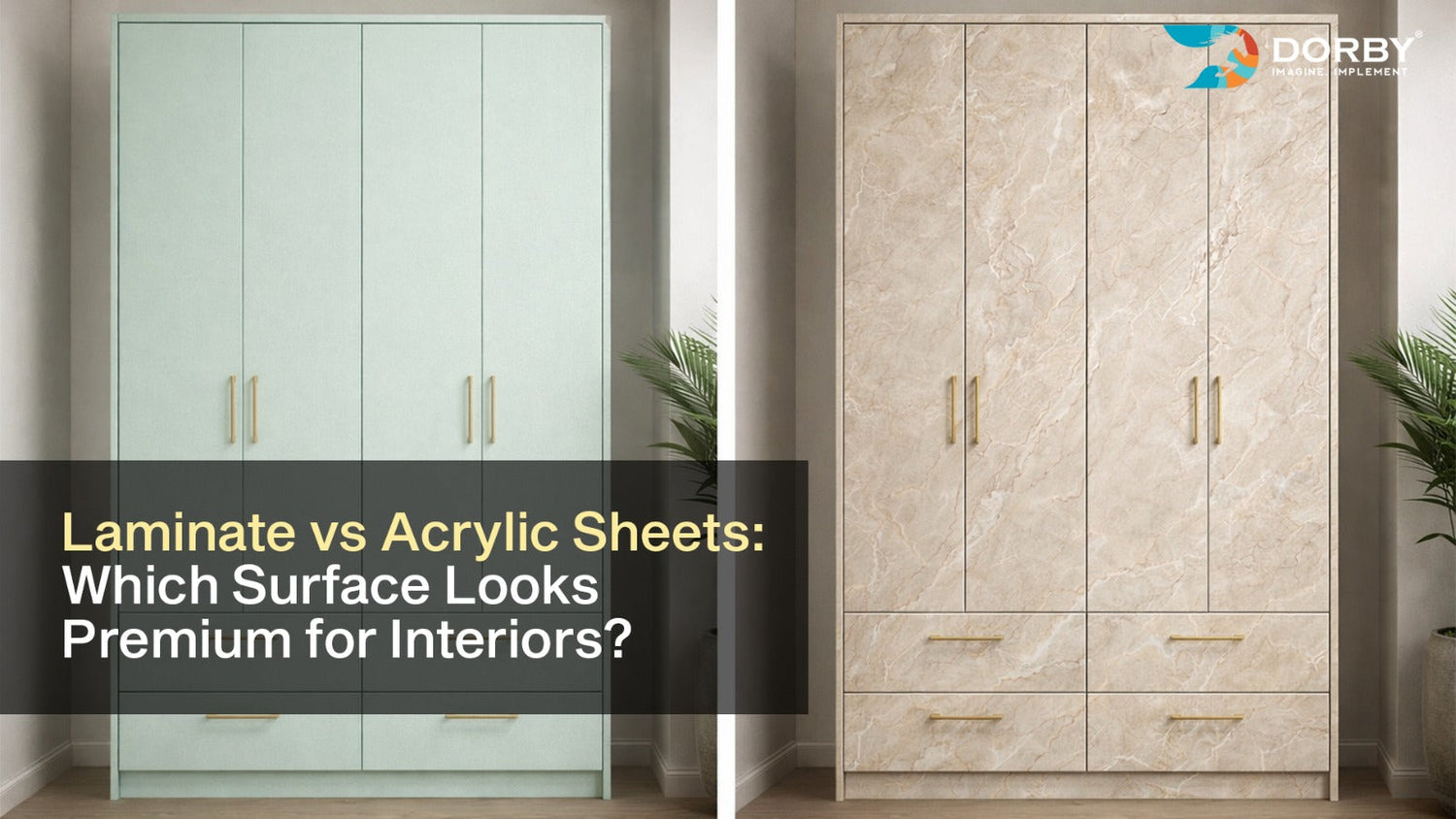
In interior design, surface finishes quietly shape how a space is experienced. They affect the way in which light circulates in a room, the fineness of a surface to touch and how luxurious the overall interior looks. Laminates and acrylic sheets are some of the most common surface options that are popular these days.
This raises an important design question: which surface looks more premium? Let us discuss the comparison to know about the aesthetics, performance, and lifestyle suitability to help you decide.
What Are Laminates?
Laminate sheets are decorative finish surfaces applied to the surface by pressurizing and heating layers of printed decor paper with resins. They are usually applied to cabinetry, wardrobes, wall panels and furniture surfaces of residential and commercial interiors. Dorby's laminates catalogue shows an extensive collection of wood grains, stone-inspired looks, elegant matte finishes, textured surfaces, and designer selections.
These designer laminate sheets are created to make interiors have a visual depth and detailing of the surfaces. Overall, the luxury laminates are preferred due to their flexibility in design and for providing a high-end look in various interior styles.
What Are Acrylic Sheets?
An acrylic sheet is a smooth and high-gloss surface material made from acrylic polymers. These are known for their reflective and glass-like finish. Acrylic laminate sheets can be seen in many different types of contemporary interior applications, such as modern kitchen cabinetry, TV units, decorative panels, and retail settings, where visual appearance is of utmost importance.
Dorby's acrylic collection includes glossy, mirror, stone, and subtle sparkle finishes. These are all designed to add shine and dimensional depth. The promise of acrylic lies in its luminous surface quality, offering a mirror-like sheen that immediately draws attention and enhances contemporary design settings.
Visual Appeal - How They Compare
When comparing laminates and acrylic sheets, the visual appeal is the defining factor that will show the relationship between light, texture, and finish, which will make up a premium interior experience.
1. Surface Finish and Light Response
Matte and textured laminates are used to produce a more laid-back and composed look. They take in the light softly and give interiors an air of understated elegance. However, acrylic sheets are too reflective. They reflect light around the room and create spaces that are brighter and have a broad appearance due to their glossy surface.
2. Style Versatility
The distinction of luxury laminates is that they can be made to look like wood, stone, metallic accents and artistic patterns with impressive realism. That is why they can be used in traditional, transitional, and modern interiors. The acrylic surfaces are closely associated with contemporary and minimalistic environments where clean edges and reflective surfaces are the rule.
3. Perception Of Premium Quality
High-gloss acrylic often feels bold and visually luxurious at first glance. Laminates convey a more well-developed and multifaceted image of high-quality elegance. Finally, the decision depends on whether to pursue a design objective that is oriented towards dramatic glitz or to achieve it with a degree of subtle sophistication.
Performance & Practicality
In addition to aesthetic consideration, the main factor is the daily experience of the surface. The performance and utility contribute to the refined and comfortable interior in the long-term.
1. Durability
- Laminates - These are easy to handle for daily use as they are not easily scratched or damaged and can resist minor impacts or overall wear and tear. Therefore, these are suitable to be used in high traffic areas such as kitchens, wardrobes and the office.
- Acrylic - These surfaces deliver a striking glossy finish, but they are more prone to visible scratches. They are most effective in low handling situations where appearances are essential.
2. Maintenance
- Laminates - They have minimal maintenance requirements. The surface can be cleaned by simply wiping it with a damp cloth on a regular basis.
- Acrylic - It should be thoroughly cleaned with soft cloths and mild cleaners to maintain its mirror-like finish and avoid swirl marks or streaks.
3. Resistance To Elements
- Laminates - Offer reliable resistance to moisture and heat, especially when higher grades are used, making them suitable for kitchens and humid environments.
- Acrylic - May not be able to react with harsh materials and strong chemicals because this will flatten the surface or damage it in the long-run.
4. Cost Implications
- Laminates - Laminates are affordable and have wider pricing options. This gives you the ability to use them for both big projects and low-budget interiors.
- Acrylic - This costs more due to its premium look, advanced manufacturing process and high-gloss aesthetic appeal.
Where Each Surface Shines
Every space needs a combination of subtle style and bold visual impact at times. Knowing where laminates and acrylic sheets work best can help you make spaces that look high-end and balanced.
Laminate As The Go-To Premium Choice
The designer laminate sheets are ideal for the wardrobes and other interior closet areas, where the smooth finishes particularly provide a rich and tactile experience. They are also perfect on feature walls, which replicate the warmth of wood or the beauty of stone. Laminates are also used in dining units, shelves, and furniture panels, where appearance and everyday usability are important.
Acrylic For High-Impact Visual Moments
Acrylic laminate sheet surfaces shine in high-gloss kitchen cabinets, where reflected light enhances the overall ambiance. They work well in TV units, media walls, and accent panels, which require visual depth.
Designer tip - Acrylic can be used by combining matte laminates with glossy accents to get layered and high-quality interiors based on the lighting, lifestyle and space ratio.
Cost & Long-Term Value
When comparing costs, it helps to look beyond the initial price tag. Laminates often deliver excellent visual returns across varied budgets, making them a versatile choice for long-term interior planning. Although more costly, acrylic surfaces have a powerful appearance that can match the modern-day design preferences.
The real worth is individualized by the fact that the surface keeps on appearing and feeling even after some time. The high-end look combined with an easily maintainable quality tends to render lasting satisfaction to both the house owners and architects.
Conclusion: So, Which Looks Premium?
Both surfaces bring distinct strengths to interior design. The luxury laminates are characterized by the fact that they are versatile, have a tactile appearance and can be adapted to various styles. The glossy brilliance of acrylic sheets provides bold and contemporary style.
No one design is "better" than another, only the right choice for your design intent. With consideration of the style preferences, comfort of maintaining it, the space requirements and budget, you will be able to choose the surface that will feel premium. Thoughtful surface selection transforms interiors from simply functional to truly refined.


